Showing posts with label Landscape. Show all posts

Monday, 7 October 2013

Is Art a science?

A question for you. I blurt it out in haste, slightly under my breath in the vain hope, that by saying it quickly, with my eyes closed, hands over my ears, screaming 'la, la, la, I can't hear me' that I can somehow pretend I didn't ask it of myself and that it might go away or be slightly easier to answer...rather than the two decades I fear it might take to understand. So,
Is Art a science?
I must be asking the question 'wrongly' as Google, for once, is not at all helpful. What I am trying to articulate, is, can the decisive and evidential nature of science explain and rationalise the value and worth of Art. Are there scientific priniciples or laws that can be applied to art that if followed, elevate the quality of that artwork?  Science can explain much of life around us, so why not Art too?  Personally I hope it can't...but then I would be living in a flat world with willo-the-wisps and goblins, totally oblivious of any need for periodic tables and pi!

Science should excite me more than it does. But it takes away the magic for me, by rationalising everything. Science requires a logical reason for everything, even if it doesn't know what it is yet. Art feels more accommodating and free-thinking than this. I enjoy the fact that art is a means of expression, that cannot be wrong or right. Science would never allow such ambiguity. But I'm having this niggling doubt, that this might not be the case. Are there underlying formulas that the great masters applied to their art consciously or otherwise?  We know about compositional rules like the rule of thirds, but is there more that could be gleaned from the field of science to explain why some art is elevated to a masterpiece and others not.

A question put to readers of the Guardian Online this week 'What makes a painting a masterpiece?' generated an interesting response from a reader, backwards7. I know nothing of backwards7 or Harald Borja who he speaks of, (little came up on a google search either), however, despite this, I found his reply really interesting. It offers an  alternative and unorthodox view of what defines a masterpiece removing the talent of an artist to that of their ego alone. I include backwards7 response here in full.
The Norwegian writer and commentator, Harald Bɵrja, is regarded as the founding-father of the mikro-estetisk (micro-aesthetic) school of art criticism, although he vigorously disputes this terminology. In interviews Bɵrja has attempted to define himself as a scientist for whom visual beauty is incidental and subservient to underlying physical processes that are invisible to the human eye and all but the most powerful microscopes and scanners. He regards the universe as deterministic and therefore void of any true creativity or spontaneity, which he consider to arise from the vanity of the artist.
I will not delve any further into Bɵrja's complex opinions on this subject, mainly because all attempts to accurately translate his 2700 page treatise from its original Norwegian, in a manner that conveys its true meaning, have failed. Regrettably I do not speak the language well enough to make my own attempt. 
For Bɵrja a masterpiece is defined by details that exist beyond the scope of human perception: You or I might gaze upon Charlier's Theatre of 18th Century Man and be moved by the humanity of these sculptures which appear to radiate an inner light, as if the soul of the subjects was somehow infused in the plaster. Bɵrja would regard this as a superficial distraction. While he agrees that this artwork is undoubtedly a masterpiece his appreciation of it lies in the “whorls of particle matter” that comprise these sculptures “as if a school of tornadoes have momentarily resolved themselves in human form.”It is this methodology that often leads Bɵrja to make controversial statements. A good example is his insistence that an amateur painting of some cats that he purchased from a cafe in Zurich is worth more to the art world than Van Goph'sSunflowers series, which he regards as a collection of unfinished works in progress that will only be improved by the passing of time, an accident, or some violent act of human intervention. 
In support of this Bɵrja points to an impasto smear in the bottom right hand corner ofTwo cats which accurately reproduces a section of the Swiss Alps.As stated above, Bɵrja embraces the concept that decay and vandalism play a role in the creation of great art and cites cases where these processes have elevated previously banal paintings and sculptures to works of majesty. Regrettably a few individuals have taken his philosophy to heart and have attempted to make their own 'improvements' upon priceless treasures:In 2007, a student and devotee of Bɵrja flung a vial of sulphuric acid at Die Magd von Echternach while it was on loan to a museum in Atlanta. The damage caused to the painting proved to be irreparable. It is now displayed with a velvet curtain covering it left-hand side. 
A few months after the attack Bɵrja made a comment during an interview with the Czech art journal - Oko Jehly - that appeared to endorse the actions of the vandal, remarking that “what was once serviceable at best is now a thing of rare beauty.” 
Naturally this provoked outrage and was widely criticised as an irresponsible thing to say, yet I have no doubt that these words were spoken with great sincerity. Bɵrja genuinely believes that, in the aftermath of the acid attack, the painting is more beautiful on a microscopic level.He has a right to air this opinion, however I sometimes wish he that he would temper his word or at very least condemn the actions of those who attempt to cause damage to works of art. 
From this brief introduction to Borja's views, he is putting forward an alternative criteria on which one should be appreciating art. There is an implication that art is qualified on a molecular level. This doesn't necessarily suggest why a painting is a masterpiece, but alludes to other methods on which you could judge a masterpiece.

The neurological theory of aesthetic experience [1] is responding directly to the idea that there are neural mechanisms that mediate our views on aesthetics.  The authors suggest that:
'artists either consciously or unconsciously deploy certain rules to 'titillate the visual areas of the brain'. 
Bingo. I want to know more about how artists titillate. The authors suggest that the aesthetic experience can be linked to neurological theory. The article is detailed and technical, and whilst the neurological theory grounds the principles that are outlined, it is their practical applications that is of greatest interest to me:
  • peak shift effect...making caricatures. Accentuating features and contrasts. 
  • binding...perceptual groups. Gestalt principles, paraidolia. Finding patterns in things.
  • isolate...reducing subjects to an outline, or to one element to accentuate it. Removing the congestion or noise.
  • symmetry...making use of juxtapositions complementary or incongruous
  • metaphor...visual puns, allegories, poetic, classifying of dissimilar events
  • perceptual problem solving...a visual puzzle where meaning is implied rather than explicit.
Some of this sounds familiar and I can recall echoes of it from tutors and textbooks.  However, the fact there maybe a science behind art demands further investigation. Elkins (2008) has written a fascinating paper entitled Aesthetics and the two cultures [2] on the uncomfortable dialogue between science and art.
Several times I have started and abandoned a book project with the title The Drunken Conversation of Science and Painting. The title is meant to conjure a comedy of errors and misunderstandings, and the drunkenness is to imply that the two sides have some infatuation with one another, which compels them to keep talking without really connecting or making too much sense.
Elkins suggests the terminology that the two disciplines have are not compatible and are therefore are disconnected. Terms that have been explored by scientists of art such as elegant, fruitful or beautiful fall short according Elkin and would be wholly insufficient when describing a piece of artwork. Elkin evidences several attempts of scientists, mathematicians, art historians and critics to understand how an artist created a piece of art. But there seems to be an ongoing gap between the two traditions of science and art. It isn't that science isn't being applied in art, but it seems to be a facilitator or mechanism for artistic motivations, rather than symbiotic in the creative process.

Is the creative process a scientific one? No...Yes...flounder...I will need longer to read up on this...just give me a decade, maybe two.


[1] Ramachandran, V.S., Hirstein, W. 1999. The Science of Art. (Journal of Consciousness Studies)
[2] Elkins, J., 2008. Aesthetics and the Two Cultures: Why Art and Science should be allowed to go their separate ways. www.academia.edu.

Friday, 4 October 2013

Landscape submission posted off

The box has gone.  I never thought it would leave the building.  Like last time, to get the submission in a coherent state and ready to go, took so long. It's that last bit, you know, where you've finished everything, think you're done, but then presenting it and making it work as a whole submission is a really big job.

How do I feel? Fatigued and a little deflated. I don't have that woohoo feeling at all. So much effort goes in to the course and assessment submission. I can't stop myself investing the time, but I can't quite reconcile it either. If I enjoyed it thoroughly, that would be justification enough, but I haven't, for much of it. I tie myself in knots, become really frustrated and am never, ever satisfied. My expectations are high, too high, both of myself and perhaps of the guidance I'm seeking, augmented by the long-distance nature of learning with the OCA. Either which way, it is neither a balanced or harmonious way of working.  I am become too intense and unsettled in the process of making work. Issues challenge me to the core and I find myself trapped, my escape delayed, for an age, by my own intellectual limitations.  

Although ultimately, I have forged a path, and now the module is complete, I am proud of my work.  I made it to the finish line. And in a way that I feel is true to myself, yet fitting of the course.  I am pleased I didn't default altogether, it was a close call. I have to think carefully before committing to level three however. I need to be clear as to why I'm doing it, as there must be many less demanding or troubling ways of spending my time.

For now however, October will be taken up in the present, 'spring-cleaning' this blog.  As I deferred for nine months, there is period of absence on here which was replaced by write-ups in the submission. I have lost impetus with blogging and have been fairly withdrawn in my study all round. Maybe now the pressure is off, I'll stop feeling so grumpy...or maybe I'm at the age when it is an acceptable pastime to be grumpy!!


Thursday, 26 September 2013

everything is a remix

This is a really useful video about 'copying', to remind those, like myself, who beat themselves up from time to time about how original (or unoriginal) an idea is. COPY, COMBINE, TRANSFORM. It's all cool and nothing is new, not really!

http://everythingisaremix.info/watch-the-series/

Wednesday, 31 October 2012

Being Afraid


This post is not specifically related to halloween, although I suppose by looking in to the darkness you could consider it on-topic. Well, today was a write-off...it rained torrentially all day, non-stop...so we built a fire, cosied up on the sofa and watched a film.  We watched Up. The children had seen it before. I hadn't. And I was not expecting to be reduced to a blubbering wreck within minutes of watching it and then finding myself unable to shake off my morosity for the rest of the day.

It was one of those well-written stories where it talks at one level to children, but the adult messages were so poignant. I was so sad.  My youngest tried to reassure me, 'don't worry mummy, they aren't real life'. Why was I feeling so rubbish?...I think the film touches on universal fears we are afraid to think about and by fast forwarding through life, distilling it to its bare essentials, the film makes it difficult for you to ignore them...And that got me thinking about fear and what we're afraid of and whether by recognising and addressing those fears they no longer command a presence. But we're human and such an ask is probably too much. However, perhaps it is something you could explore photographically. I quite like that idea. Perhaps the first step in this instance would be for me to acknowledge the fear of my fears that the film mobilised in me. They are, I warn you, a little morose.  They all relate, in part, to the impermanence of life and certainty of death and I am sure are common to many.  I fear that:

- I won't know how I will die and if it will be painful and prolonged.
- I may lose a loved one
- I will never know what is after life (while alive at least!)
- I may have regrets
- the years take you towards old-age, deterioration and certain death
- ill-health or bad things may happen to loved ones or myself
- the everyday routines of life may drain the joy of youth away
- quality of life may actually be preferable to quantity
- I'll be old before I know it
- my children may not like me when they grow up
- I may reach old age and feel disappointed with myself

So, a film, ironically with the title Up, made me feel hopelessly down and unexpectedly face my own fears of death...honestly!! I would have been better watching an '18' classified psycho-thriller! I know death has been written about extensively in the context of photography but one cannot ignore the cruel irony and slightly disturbing 'truth' derived from the permanence of a photograph and how it makes a mockery of our own temporarity.


The video footage above was taken in 2006 with what was then a new camera with video capability. It was a 'tester' video, to see how the camera worked...nothing more. Yet now, all three subjects in this video are no longer here. Whilst not wanting to state the bleeding obvious, they are though, right here in this video. I'm not making much sense, but giving this a little thought, I can see that to address the fear of death itself, through photography, could be cathartic. Anyway, I'm not sure how, or if, this is relevant or helpful to my study, certainly not for the moment, but it may be something to consider at some point in the future...given that the subject of 'death' will be relevant forever more, I guess there's no rush!!

Some more inspiration

So I find myself time deficient and unable to find the time to keep this blog up to date at the minute. But for now, I am going to list a few photographers that have specifically informed my work or inspired me of late...you will see there is a thread developing. And when I finally write up my posts on recent work it'll become clear how it fits in.

Letha Wilson
This is not a site I found easy to navigate, but I have found little else on line to direct you to (try the visionfield blog here to see her work). It is her photographic sculptures of the 'idealised' American landscapes that interests me. She has effectively 'butchered' the images by physically altering the print. She folds, crumples, covers in concrete, scribbles the photographs to create sculptures. It is taking the tactility and physical aspect of the photograph and transforming it in to something else. As has been documented about her work, it is pushing the conventions of landscape photography in a new direction. Her work interests me because it is altering the aesthetics of the ideal/picturesque American landscape to create something entirely different.  She is an artist who has used photography as an integral part of her artistic practice...no longer isolated from art.

Chris Engman
There is an excellent interview on the eyecurious blog about his work here. Similarly to Letha Wilson's work he creates sculptures but rather than of the photograph, it is within the photographs themselves...he intervenes in the landscape to question the objectivity of photography and the meaning of truth...and how manipulated images maybe more 'truthful' and authentic than one that is not.  He considers himself an installation artist who puts great labours in to his images, choosing not to take digital shortcuts. He himself compares his approach to be more akin to a land artist such as Robert Smithson than a landscape photographer. He makes use of the language associated with the landscape genre but his intervention challenges this. There is something playful and laborious about his installations that are engaging on many levels.  My interest in this work is his intervention in the landscape and his acceptance that objectivity is indeed futile.  His workmanship and play on the restrictions of a two dimensional medium work very well.

David Smith
His first concept 'anthropocene' (which I had to look up and according to wiki, means 'an informal geologic chronological term that serves to mark the evidence and extent of human activities that have had a significant global ecological impact'). Not unlike Mishka Henner, Smith appropriates internet photography such as google street-view and maps...which it seems have so many others. His prints are created from thousands of digital files composited of aerial views and then making use of formal patterns and motifs to create beautiful abstract yet orderly chaos within the pictures. This project aesthetically highlights how different perspectives can alter understanding and meaning of the landscape.

His other project called 'arecibo' (I had to look this up too and wiki tells me it is a radio telescope and is the world's largest single-aperture telescope). This project again makes use of internet imagery and whilst I am less sure about his motivations behind the project, the abstract aesthetic appeals to me. Again, not exactly the same, but food for thought for me on composites and making new images out of existing images.

Thomas Devaux
This website I find annoying, however, it is his collage work in gallery 6 that is particularly relevant to my work. And whilst I find the work a little eerie and a little sinister in places, some is exquisitely and weirdly beautiful.  His process and how he arrrived at the montages and indeed re-works of paintings one can learn from. This video elaborates on the process of getting there. The idea of deconstructing and rebuilding to create something new is fascinating and troubling but does again suggest greater freedom in the field of photography...another reminder to break those shackles.

Tom Hunter
He has some amazing work on his website, although it seems strange to me that he states 'internationally renowned artist' on the entry page. If you're internationally renowned, then why do you have the need to say it...anyway, Tom Hunter's work will be shown in the up and coming Seduced By Art exhibition. The work that particularly interests me is highlighted here where he utilises the form and reinvents classic gestures and symbols prevalent of famous masterpieces in a contemporary environment. There is something quite compelling...firstly the recognition that the compositions, postures and content of classic artwork that can be applied to contemporary photography and that it is still so relevant, reminding us that universal truths are not time limited either. His work will give me another nudge to explore the classic paintings of the past. I have just received the Seduced by Art Catalogue which is a good start.

Vernacular Photography
A new term to me meaning photography by amateurs or unknown photographers who take everyday life and common things as subjects.

Thursday, 25 October 2012

Future of Photography

On the 1000 words Photography Magazine blog there is an interesting lecture on the future of photography, see here. It's an hour long but if you have the time it is well worth watching.

Key points of interest for me:

- the future of photography is today, technology is no longer a limitation
- digital versus analogue - there is porosity between the two, lines are becoming blurred
- photography of the future will be more to do with how with circulate, organise and consume images than how we make them
- photography is gaining freedom - appropriation, reorganising found photographic material and the diverse physicality of the output are examples of this.
- how will we edit, filter and organise archives
- the web means images are not filtered and are often recontextualised...current online consumption of images is to do with quantity/frequency over quality.
- because of the volume of imagery now being uploaded through sites like facebook, for artists/photographers to create something meaningful, it forces them to do something out of the ordinary and may increase the pace of this.
- The physical object is becoming more important.  What value is there to see it in a gallery rather than online.
- you can no longer disentangle photography from art.
- the medium of photography is no longer just a camera, it is the whole process

None of this is new, but it does reinforce views I have heard and read elsewhere recently.  There are a number of photographers mentioned within the video that I will come back to as they can inform my photography.

Thursday, 18 October 2012

Jo Teeuwisse

This works for me.  Jo Teeuwisse is a Dutch historical consultant and bought 300 old negatives at a flea market in Amsterdam. Wow, what a find. I think the approach of overlaying the archival photos, which are of soldiers in war-torn France, on the present day locations, is really very powerful.  A similar treatment has been used by Shawn Clover and I am sure I have seen other examples too in the past.

There are three things that interest me in particular about Teeuwisse's work.  The first is that it offers a suggestion as to how one can reconcile the challenge of photographing the past in the present. This is something that I ponder not infrequently about bygone eras within the Lakes and how current landscapes belie what has been before.  The second is that it is yet another example of how one can use photos as a vehicle for a greater purpose and not an end in itself. In this case, the purpose of the photograph is less relevant than its ability to support the greater goal, which in this case is 'to give a deeper understanding of our history'.  The third aspect, not unlike the work of Mishka Henner or John Stezaker, is the continued trend to 're-work' or 're-use' images from the past and alter or transform their meaning by adding or subtracting something from the image. In Teeuwisse's work I personally find this 're-work' does give deeper meaning and relevance to the subject by bringing history back to the current day which does make it relevant to us, now. And it enhances what were clearly already strong images that she acquired.

Wednesday, 3 October 2012

It won't stop raining here...ever...this is one from the archive. Unlike other resources such as precious metals, petroleum and patience, it seems there is an endless supply of the wet stuff!!

Monday, 1 October 2012

Liverpool Biennial

On Saturday, by the skin of my teeth, I was able to attend the OCA study visit to the Liverpool Biennial. We visited four galleries (The Bluecoat, The Tea Factory, FACT and Open Eye) and a good few artists work were viewed during the four hour tour of the Biennial...sensory overload - yes, exciting - hmmm!

The theme was 'the unexpected guest'. Peter gave us some pointers early doors about what to look for...whose work was inspired by the theme and whose work was interpreting the theme and note the difference. What does the work mean and to whom? How can you apply this to your own work? Why have the gallery put the work up?

Strangely with the exception of the Stuart Hall video, much of the work seemed to originate from overseas. And this in itself I think adds a level of confusion and complexity.  Trying to decode meaning in the images/art when it is overlaid with cultural and societal references unfamiliar to you makes it so much harder to find a way in. This in some ways inhibits your ability to read what is before you but perhaps conversely allows for greater interpretation. And to a certain extent this is may be why I left the day feeling like I hadn't connected with much of the work or that it wasn't communicating to me...perhaps I was the unexpected guest.

The Stuart Hall film by John Akomfrah is perhaps the exception. It was informative, confusing, troubling and complex in its composition and sequencing.  Filmed over three adjacent giant screens, I found, not unlike watching a tennis match, your head was too-ing and fro-ing through the multi-faceted film backwards and forwards from screen to screen throughout.  It was quite an extraordinary piece and the credits at the end of the film suggested it was quite an undertaking with dozens of names appearing. The film was entrenched in the idea of identity with regards race and the tapestry of landscape through memory, largely centred on the UK. My question with regards this film is just that. It was a film...with the use of stills within it, but clearly the images were supported with sound and moving footage. When does a photo-film become a fully-blown film? And does it matter? If you compared it to films shown in art houses, how would it stand-up or compare?

Many photographers (this is probably a misnomer, I should probably say artists) are using alternative ways to exhibit their photos. But this was an art festival, not specifically a photography festival...and that starting point was evident throughout the day. In the room next door to Akomfrah's film, Dora Garcia's Outside used several big box TVs which had spatial impact even if the content didn't. Artists such as Sun Xun created a large-scale installation over three decorated walls with the the use of wallpaper, painting and film animation. The distinction between photography and other art forms and how photography is utilised as a form of expression seems to be a 'non-issue' in this environment. Anything goes. The issues of representation or depiction that embroils journalistic photography just isn't there. Any medium is used in order to facilitate the communication.

Go to a photography exhibition and there is much clearer boundaries and expectations of the viewer and indeed of the photographer. The presentation of photographs is relatively uniform and conventional because of this.  Although there were some really nice touches to heighten the photographic experience at the Open Eye gallery, with both exhibitions (Kohei Yoshiyuki's and Mark Morrisroe's work).

The use of torches in the exhibition of Kohei Yoshiyuki's The Park work was an interesting touch.  Although the content of the work I have seen at the Exposed exhibition at the Tate Modern previously which certainly lessened the impact of the work for me.

And what was this being 'plunged' in to darkness all about?  It made sense with the Kohei Yoshiyuki's work, but it's use, for me anyway, was unnecessarily excessive at other venues.


The photograms by Mark Morrisroe appealed greatly just for the refreshing use of bright colour and vivid aliveness that for me, seemed to be lacking in the rest of the work we'd seen that day.  A lot of work is so earnest and serious, which I know is a reflection of life, but surely there is scope for a little more humour. We're British for goodness sake, it rains all the time!!

Although there was a cheeky piece of work by Akram Zaatari I think it was, reenacting childhood photographs and posing adults in their place which then totally alters the inference of the image. There is quite a lot of work out there which is exploring such themes at the moment.  Clarisse D'Arcimoles, Irina Werning, Joachim Schmid, John Stezaker, all come to mind.

Sabelo Mlangeni's work gave the impression of a bygone era given his choice in aesthetic and way of presenting his documentary work in the Tea Factory, but were infact taken relatively recently. And there was more than a little influence of the South African photographer Roger Ballen evident in his work.

So what to take away from this...for me, at the moment, exploring the artistic ambitions of photography is what interests me and this was a useful trip to scope the possibilities.

Thursday, 27 September 2012

Assignment Two Update

In my last update I mentioned two approaches for assignments two (and three). The first was Easdale Island and the second was Home.

i. Easdale Island


So, this is a small selection from our week in Easdale...a fascinating island which if you're interested here is a link...no cars, streetlights or roads...wheelbarrows are the mode of transport!! So, I have a set of fairly nice images. But 'nice' is boring. I'm asking myself 'so what?' 'why bother?' 'what did I learn from taking these?'  There is no interesting narrative or intention behind them. They're sadly cosmetic and shallow!! How could this series inform my practice? In my view it doesn't. So I won't be submitting these for assignment, I don't want to waste my tutor's time advising me how to improve on a series of essentially holiday images that I have no interest in developing or reproducing. I tried...

ii. Home
This was the series I envisaged having more scope for development. An early setback was the lady I was hoping to speak with, the dweller who has lived in the village the longest has health issues and has been unavailable. Without her, my knowledge is limited. I'm not in a position to force this issue.  In addition the symbiosis of landscape/place/inhabitants both historical and how to present this in a photograph is still unresolved in my head. So for the time being, I'm not in a position to pursue this, but it may be something I come back to.

Monday, 10 September 2012

Leeds Study Visit : the bit after

SANITY WARNING: very long post...
Image courtesy of Amano Samarpan
Team 2012:  
Amano, Teresa, Fiona, Rob, Helen, Shaun, John, Dave, Paul, Catherine, Jesse and Rob B.
Mark, David, Stan, Tim, Yiann, Eileen, Penny, Bicky, Gilly and Peter...no Sarah!


REFLECTIONS

I feel I have been surfing on the crest of the Leeds wave since returning home and I'm trying my best to hold on to the enthusiasm as long as I can, clawing at what seemed like an elevated plain of understanding, fearing that at any moment I may slide back to my old, confused and troubled ways. I am liking this inspired feeling and hoping it won't fade too fast...

There were, it transpired, a number of us who were seeking great things of ourselves from this weekend. Search parties were engaged to seek AWOL mojos, reduced strides and absent breakthroughs.  It was, with hindsight, quite a lot to ask of one weekend. Yet in the same breath it shouldn't be underestimated the commitment that twenty individuals made in buying in to this idea...it has never happened before, we all opted in 'blindly'...but hey guys...we pulled it off...the first twenty...'trailblazers for the OCA' in Gareth's words!

I have written an article for OCASA about the weekend and how to organise such an event so I don't want to repeat it all here...I will add a link when it is up. This link to a flickr thread I add too as it links to other student reviews from the weekend.

There really was a genuine desire and hunger to learn...an enthusiasm and interest in the subject that was intense and contagious. Infact, when we talk enviously of our fellow students in B&M universities, who have the student bar at their disposal and the opportunity for face-face discussions, I suspect rarely will those smoke stained walls bare witness to such involved and interesting conversations...well I am biassed!

And I cannot tell you how valuable and enjoyable being in an environment with fellow students, and indeed tutors, was/is. I didn't know how much I'd missed or needed it until this weekend...it has really highlighted to me the value of this interaction and I will seek it out more determinedly going forward.

The venue was The New Ellington in Leeds...and I swear to you, I did not know it was a Gin Bar before we arrived...anyway, I'm hear to talk about my other interest...

OBSERVATIONS
So anyway, what I have written above feels dated already as it is over a week past and this post still sits here waiting for me to finish this next section which goes on and on - there is almost too much to digest and write down so here are a few points of learning below and I may have to come back with the rest.  

In person
Image used courtesy of Mishka Henner
Less Americains
The presentation by Mishka Henner and indeed Jesse Alexander too, is evidence to me that there really is no substitute for hearing first hand the artist/photographer talk about their work...prior to hearing Mishka speak, the spurious articles and controversial nature of his work left me intrigued but perplexed by the work. But equally you can learn so much about their motivations in creating such work. I have read it elsewhere (Stan's blog I think) about being as inquisitive about the artist as the work itself...what drives such artists, what personality traits do they exhibit and where do their ideas come from. Their motivations are as diverse as their subject but the one underlying factor that seems to be common is uncompromising belief and interest in the subject, as well as dogged determination.  When projects extend, sometimes to years, that passion has to be unwavering, otherwise they will not reach completion...having that much confidence and perseverance in your own concepts is awe-inspiring!!

Photography v Art
Mishka Henner made a distinction between photographers and conceptual artists early on in the presentation. He said in 2009 he shifted to conceptual art turning his back on photo-journalism as he struggled to reconcile the issue of power that photographers have and use. He mentioned the unerring repetition of the subjects photographers are drawn to...usually the impoverished. Artists have a more critical view of the medium and their quest for the truth which he felt more comfortable with.

Joel Coelberg makes reference to this too:
The one thing that seems unique to photography (maybe this is just me not being familiar enough with other art forms) is that its practitioners for the most part are incredibly conservative as far as the medium is concerned....[I could have] asked whether photography will survive the conservatism the vast majority of its own practitioners have come to embrace. I currently doubt it will. 
It is this distinction that is intriguing and in many ways, fundamental. Mishka mentioned on more than one occasion the term Avant Garde. By this I am taking it that he means embarking in practice that is innovative, experimental and ahead of its time. This is reflected in all his most recent work. Astronomical, an encyclopedia represesenting a scale model of the solar system was nothing short of eccentric...and funny!


courtesy of Mishka Henner

Other work such as Less Americains and Collected Portraits he is offering a different view to what photography can mean. In each, he is making us question something that we have taken as a given. Take something away, or add something else to create something different...it is extremely refreshing to feel uncomfortable and feel our boundaries of protocol wobble as what we know is being challenged to its core.


Reflecting on my own work practices, threads of unclarified thought with regards the photographer/artist are not new to me...and may in part explain why my work output is slow and personally unsatisfying for the most part (see Outside in). I don't see myself as a photographer...for me it has always been about being creative and using photography as a means of self-expression, not an end in itself. I have no ambitions to 'be a photographer'.  I have photographed business events, weddings, child portraiture, product shoots...and each time I do, I realise, to my dismay, that another aspect of photography is not for me.

Another issue related to this is that I dislike in my photography what has been easy to achieve. It has no value to me. And I loiter in the regions of my mind that seem to make it impossible for me to create or achieve anything...I like the challenge, the unknown, the what if's, the impossibles...but find it too difficult to wade through.

And this is where I will have to stick my neck out going forward...to the point where I may fall flat on my face...again!! I need to break my own shackles from photography, from the traditional genre of landscape and the landscape course if necessary...I want to create...there is no conceptual art photography course. I've been 'landscaping' for ten months now and have very little to show for it. Perhaps by accepting this fact, I might actually start taking some photos. Or is this just an excuse to hide behind? This shift may not necessarily improve my work, but hopefully it may start to flow better and feel less abrasive than it does at the moment.

Now I just need the belief to start something and see it through before the self-doubts kick in...flounder, flounder...

New v Old
I am sensing a dichotomy in trends in photography at the moment between the cutting edge of technology and pushing the digital boundaries like Mishka's work or Duckrabbit's poignant photo-films.  The excerpt from this article Photography after Photography on conscientious crystallises in my mind the challenges we face:
Ironically, it is digital photography that has resulted in the current stasis of the medium. Given the possibilities, it is quite amazing to see how little digital photography has qualitatively changed photography. Quantitatively, oh sure. The number of photographs taken has exploded, especially since there are now cameras in places where there weren’t any before. You wouldn’t have a rotary phone with a camera in it or attached to it. Now, everybody has at least one camera, so we’re all photographers - or so we are being told.
There’s a lot of talk how making photographs has become so much harder given the state of things, given there are cameras everywhere. But then, if you are complaining about that - doesn’t that show the limitations of your own creativity? What can you photograph when every picture has already been taken? Well - isn’t it liberating to know that every photograph has been taken already, so now you can really take your photographs?
It is worth reading the whole article.

Don't you think this gets to the crux of the dilemma for photography students? I have been having so many queries about this in my head...and wish the Leeds weekend was coming up to discuss these ramblings...it takes so long to articulate what you're trying to say in writing. He goes on to say:
In fact, I think that it’s actually in the analog area where artists are producing the most interesting work right now, where artists are attempting to move if not forward then at least sidewards. 
Isn't it just peculiar...so bipolar...with all the technology at our feet, those making progress and turning tail, are heading in to the past, for a different future.  Has it just become too easy for us? Are there too many choices? And you can see this with Mishka Henner's work "no Man's land" where images from google street view were framed in traditional large format dimensions 5x4 because of the values associated with that format of camera or perhaps how the audience reads the context thereof.

courtesy Mishka Henner: No Man's Land
And strangely, having paid little attention to the google street view/earth photographers before Leeds, suddenly I've become aware of a whole raft such as John Rafman and Michael Wolf , amongst others. And shifting the definition too is John Stezaker, who again is an artist who creates art from photographs.

This article by Joerg Colberg, like many of his ruminations, has worked its way through all the fissures of my brain and has really puzzled me...there is one final quote I want to add:
Painting erupted once its burden of depiction was lifted. 
No 'blue sky', 'out of the box' thinking can at the moment, help me circumnavigate this dilemma. What is it that will lift the burden for photography going forward, if indeed there is one.

It is, I think confusing for budding photographers...there is a rich vein of photography heritage and iconic practitioners of the past that have formed a well-trodden path with clear and helpful framework and boundaries within which the genres have formed and many have since walked. Yet at the same time, photography is now a democratic practice...photography belongs to everybody...and at the other end of the scale, photography has infiltrated the art galleries and is gaining credence as an accepted art-form...it is really a fascinating time.

Maybe we have to learn it, before we abandon it...

That's it for now...I'll have to come back for a second bite, too much to go at...

Saturday, 8 September 2012

Wednesday, 5 September 2012


Attempt two...will keep going...putting any anxieties about its legitimacy to the back of my mind for now...I'm enjoying playing.

Tuesday, 24 July 2012

Man versus Nature

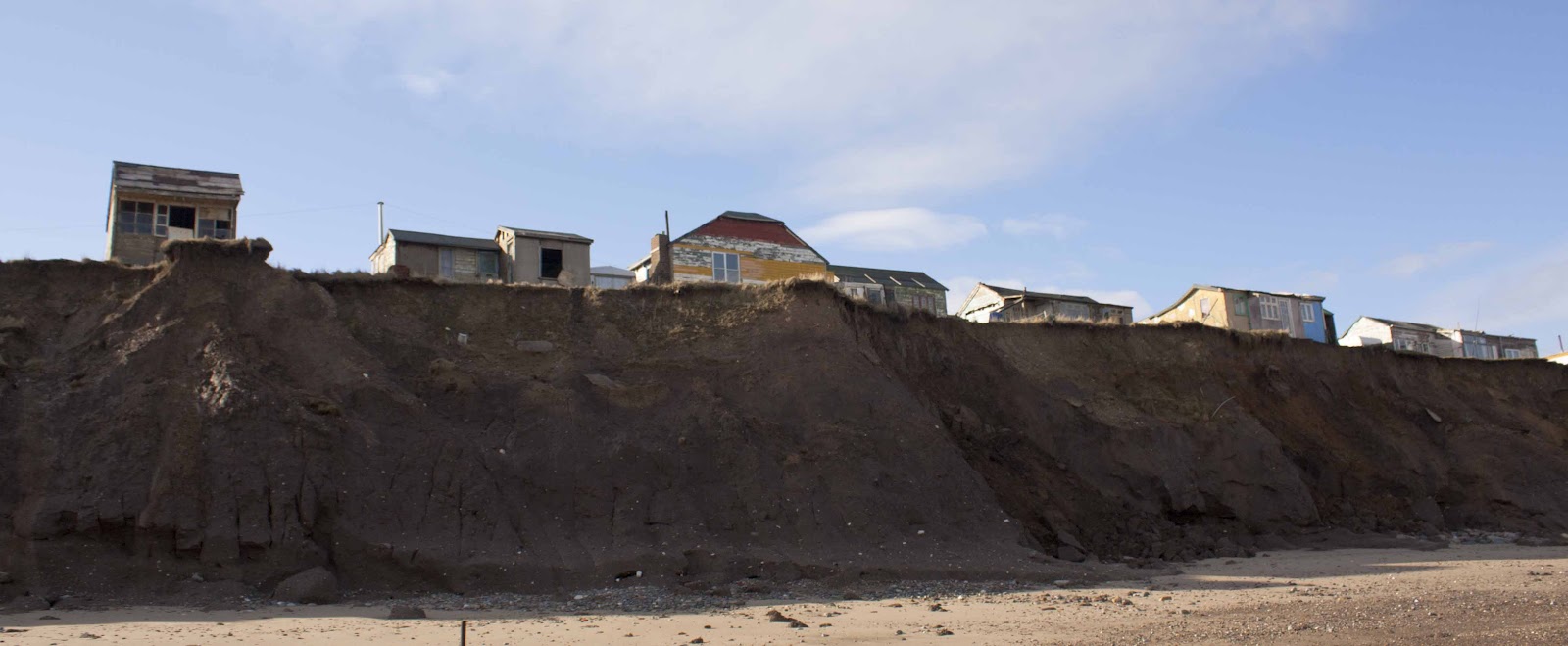
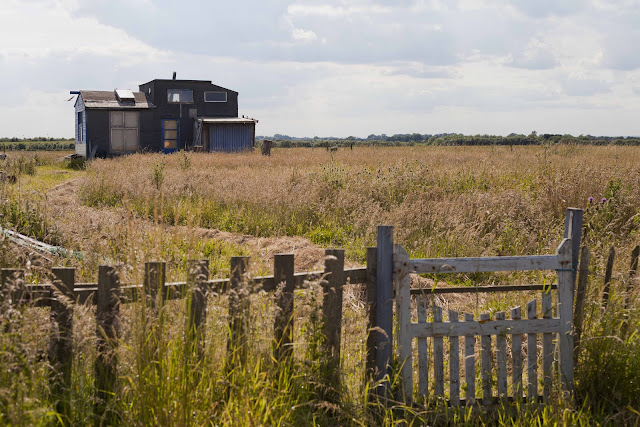
It was nicknamed Skipsea's 'shanty town', considered for years as a blot on the landscape. But, is it not a show of human resilience and resourcefulness? A piece of history is unfolding before our eyes...how can it be an 'eye-sore'? 'Millionnaire's Row', as it was known seventy years ago, is our very own riches to rags landscape story. The end is being compacted from decades to months, as high tides, heavy storms, and who knows, global warming, hasten its rapid demise.

2009


Within a few short years, I have photographed this extraordinary place. And it is the valiant and determined efforts of its residents that is as fascinating as the erosion itself. And this manifests itself in the changing fabric of the place.  Nature will win, of that there is no doubt. Yet, a steadfast few continue to rehouse further back on their diminishing plots and persevere tirelessly.

July 2012


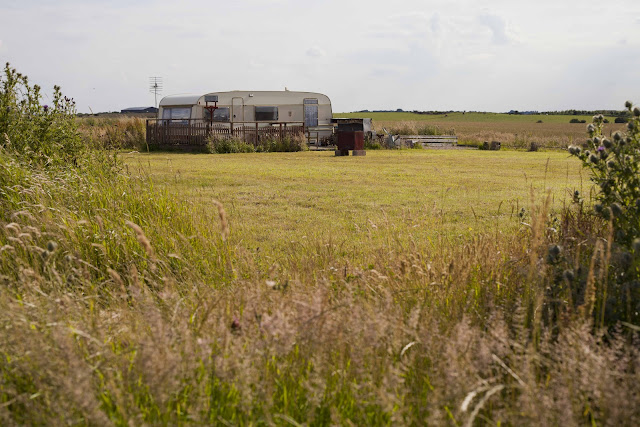
I was surprised to find on this last visit that even as erosion accelerates, there is evidence of investment in properties and landscaping. Speaking to the lady pictured below she said her great grandmother lived here and her family had holidayed there ever since. There was a real desire to eek out every last moment there while they still could. And this is in the full knowledge it is all temporary...it will all end. 


And I guess this stretch of coast demonstrates to me the difference between landscape and the human relationship with place, something altogether more personal.  So deeply ingrained is place in memory, that nostalgia and a deep 'sense of place' motivates its residents and those embedded in its past to hold on until its last breath.  I feel deeply moved by this every time I visit.Related posts: Life's a Beach, Neil White's Coastal Erosion and Going Only One Way 


Wednesday, 18 July 2012

Assignment One Tutor Feedback Part ii

Following my less than enthusiastic response to feedback on assignment one, I thought it was important to provide an update on this. Yesterday, I had a lengthy discussion over the phone with my tutor in which we covered a huge amount of ground relating to this. It was an extremely useful conversation and I really appreciate the time he has taken to do this. It went a long way in alleviating my anxieties and explaining more comprehensively the intent and guidance of the feedback.

Given the need at assessment to demonstrate how you have responded to feedback, this conversation needs to be noted on here. I am reluctant to repeat it all pigeon style as it really is directed at my work, not that relevant for anyone else and what is more important is how I respond to his advice, not regurgitating it. Over the coming months my enquiries will be posted on here in which I'll relate back to conversations had.

Evidence of notes from the conversation, 
but impossible to read or understand probably for anyone but me!!

One thing that I keep being reminded of, is that there really is no short-cut to producing good work...because it shows if you do...you have to read, you have to write, you have to do the research and you have to be absolutely clear what you are trying to achieve...and then of course you have to make a convincing photograph or two! And whilst I'm not afraid of hard work, I am aware the work becomes more extensive and intensive all the time...you never 'arrive'...and I find myself seeking refreshment breaks or 'pick-me-ups' to feed my hurting brain along the way, just to get through some of the hard miles, otherwise the distance to travel can feel unmanageable.

Wednesday, 11 July 2012

Is contemporary photography too samey?

This post raises the question about the health of contemporary photography. I ask this as I keep hearing that rude it perhaps isn't...Roger Ballen was very dismissive of it and most recently I have heard as such in three blogs, conscientious [1], fotosavant[2] and nearbycafe[3].

A.D. Coleman of nearbycafe makes the following observations:
'the well-made photograph' I use that phrase not as praise but in a derogatory sense, to describe a recurrent type of photograph produced according to strict, if unstated guidelines' [3] 
'These pictures and projects resemble each other to such an extent that, with minor adjustments, the images, their accompanying texts, sometimes even the project statements, are hot-swappable and interchangeable.' [3] 
'the well-made photographs' reiterate the same elementary formal structure [3]:
  • primary subject receives central placement and largest object in frame
  • primary subject is addressed frontally and head-on
  • primary subject is closest to the picture plane within the frame and in sharpest focus. 
  • primary subject contains the most intense highlights

In effect many photographers are working to a template, albeit tested and used by many classic photographers and painters of the past. He suggests once you're aware of this formula, you will see it umpteen times in galleries everywhere. A.D. Coleman [3] who has written this article goes on to suggest there is homogeneity with project conception too which he calls the 'well-made project':
  • it manifests itself with some documentary or sociological premise 
  • identify a literal subject matter 
  • photograph them in their own environments and photograph 40 examples of your chosen subject matter (preferably using the image-structure template described above) 
  • transcribe interviews with them or get them to write their own stories to accompany the images. 
  • draft an artist's statement explicating the significance of what you've chosen to point your camera at.
 In his words, his reasons for such a pervasive homogeneity is:
the vast majority of photography projects I encounter nowadays seem to represent some welling-up of archetypes from the collective unconscious of the academically indoctrinated. 
Alarming?

In fotosavant[2], it suggests that photographic instructors tread a fine line between teaching process and mechanics, and encouraging a particular aesthetic. The danger being that students are too keen to follow/copy/imitate the work of their teachers and teachers in danger of creating disciples. It is augmented further by curators and gallerists. The outcome being that those who 'stray from the laid path will usually find themselves derided and shut out of the discussion'.

Joerg Colberg[1] speaks less pointedly about this, however, in his post he makes three observations I wish to raise:
  • I do think that collectively, photographers are currently suffering from a curious lack of artistic ambition. 
  • There is just so much photography online, and of course that makes it seem as if there was a problem. After all, unless you're lacking any sense of taste, by its very nature most of what you'll encounter will be not what you like. So regardless of what it is you like, it seems as if there was a flood of junk out there. 
  • I do sense that there appears to be a growing discontent with photography online.
And I think Colberg's[1] observations can someway answer the predicament identified by A.D. Coleman[3]. The internet means we can and are likely to see much of the photography out there, good, bad and otherwise, with a certain amount of fetishisation and 'trending' occurring as a result. Students globally have access to the same level and quantity of information and it seems the student body, as a mass, is processing the information and producing formulaic work as a result. How should we, as students, respond to this? Why do we lack artistic ambition? What is the alternative other than the formulaic? A few thoughts that come immediately to mind:
  • look beyond the internet and contemporary photography for inspiration 
  • now alerted to the template, be aware of it...I have certainly produced  'formulaic work' according to this definition. Consider the alternatives.
  • whilst looking at the work of the elite photographers, be aware not to 'imitate' or copy them 
  • forge your own path 
Referencing Colberg's[1] last point about a growing discontent of photography online, I think this is perhaps another fundamental issue for us developing photographers. The online presentation of images and the dearth that there is out there is causing fatigue to the observer and the maker.  The photographs are quick, digestible snacks when viewed on screen.  And when the photograph is a 'product', it becomes more substantial.

I have heard Clive White mention this on numerous occasions and have recently read this article by Blake Andrews. And therein lies part of the solution possibly. Whilst on the internet the image remains 'data', as a 'tangible thing' it becomes 'information' and as such a desirable object.  Whilst some photographers are returning to the traditional methods of photography and production to create this 'worth' in their work such as wet-plate collodian, film...whether looking back is the way forward I'm not sure but I do think considering the production options of photographs will become an increasingly critical aspect of our work.

So, there goes another morning of housework...I'm sure this housewife would have been sacked many times over!!!